Croydon

London

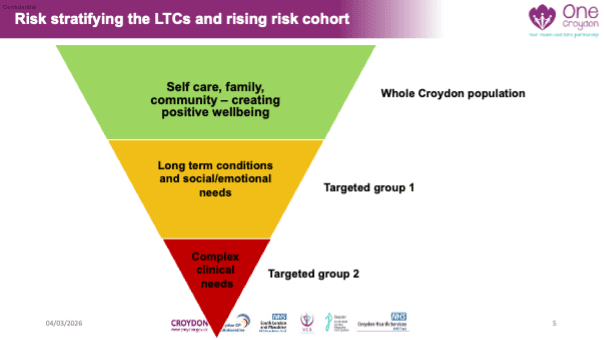
Across Croydon, 30,000 residents have been identified through data-driven risk stratification as part of our Proactive Care approach. Clinical validation and personalised support are delivered through primary care and neighbourhood teams. As part of the National Neighbourhood Health Implementation Programme, we identified around 800 additional residents who are not yet in scope for Proactive Care, but have two or more long-term conditions, medium to high risk of admission and potential gaps in care coordination that would indicate future high use of unplanned hospital care. We have tested improved multi-disciplinary team huddles in a small number of GP practices bringing senior clinicians and partners together to agree joint actions, streamline support and coordinate care.  

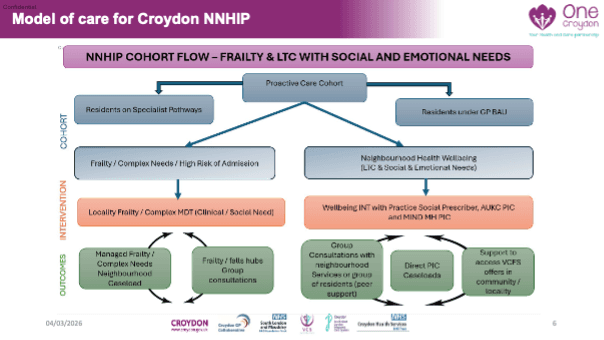
We have taken the learning from early practice-based testing to support transition to neighbourhood teams across primary and secondary care holding shared caseloads, managing risk proactively to prevent escalation and reduce avoidable admissions for people with frailty and complex needs. At the same time, we are testing neighbourhood wellbeing teams with social prescribing and voluntary and community sector staff working together to support people holistically across the wider determinants of health, to prevent rising risk. Resident-reported outcomes and service use data are helping to shape our developing neighbourhood health and care model, overseen and driven by shared health and care governance through our One Croydon Alliance.  

Across Croydon, 30,000 residents have been identified through data-driven risk stratification as part of our Proactive Care approach. Clinical validation and personalised support are delivered through primary care and neighbourhood teams. As part of the National Neighbourhood Health Implementation Programme, we identified around 800 additional residents who are not yet in scope for Proactive Care, but have two or more long-term conditions, medium to high risk of admission and potential gaps in care coordination that would indicate future high use of unplanned hospital care. We have tested improved multi-disciplinary team huddles in a small number of GP practices bringing senior clinicians and partners together to agree joint actions, streamline support and coordinate care.  

We have taken the learning from early practice-based testing to support transition to neighbourhood teams across primary and secondary care holding shared caseloads, managing risk proactively to prevent escalation and reduce avoidable admissions for people with frailty and complex needs. At the same time, we are testing neighbourhood wellbeing teams with social prescribing and voluntary and community sector staff working together to support people holistically across the wider determinants of health, to prevent rising risk. Resident-reported outcomes and service use data are helping to shape our developing neighbourhood health and care model, overseen and driven by shared health and care governance through our One Croydon Alliance.  

Join the Community
on LinkedIn

Our LinkedIn group is where the movement comes to life. Join the conversation, connect with others passionate about neighbourhood health, and stay up to date with the latest news, events, and insights from NNHIP.

Join The Conversation

A cell phone with the linked logo on it

Have a question? Contact us

Whether you’d like to learn more, share your neighbourhood health example, or simply connect with our team, we’re here to listen. Get in touch and be part of shaping healthier, fairer communities together.

Contact Us

Contact Us